


Behind The Band: Misfits - How Horror Took Over Punk Rock
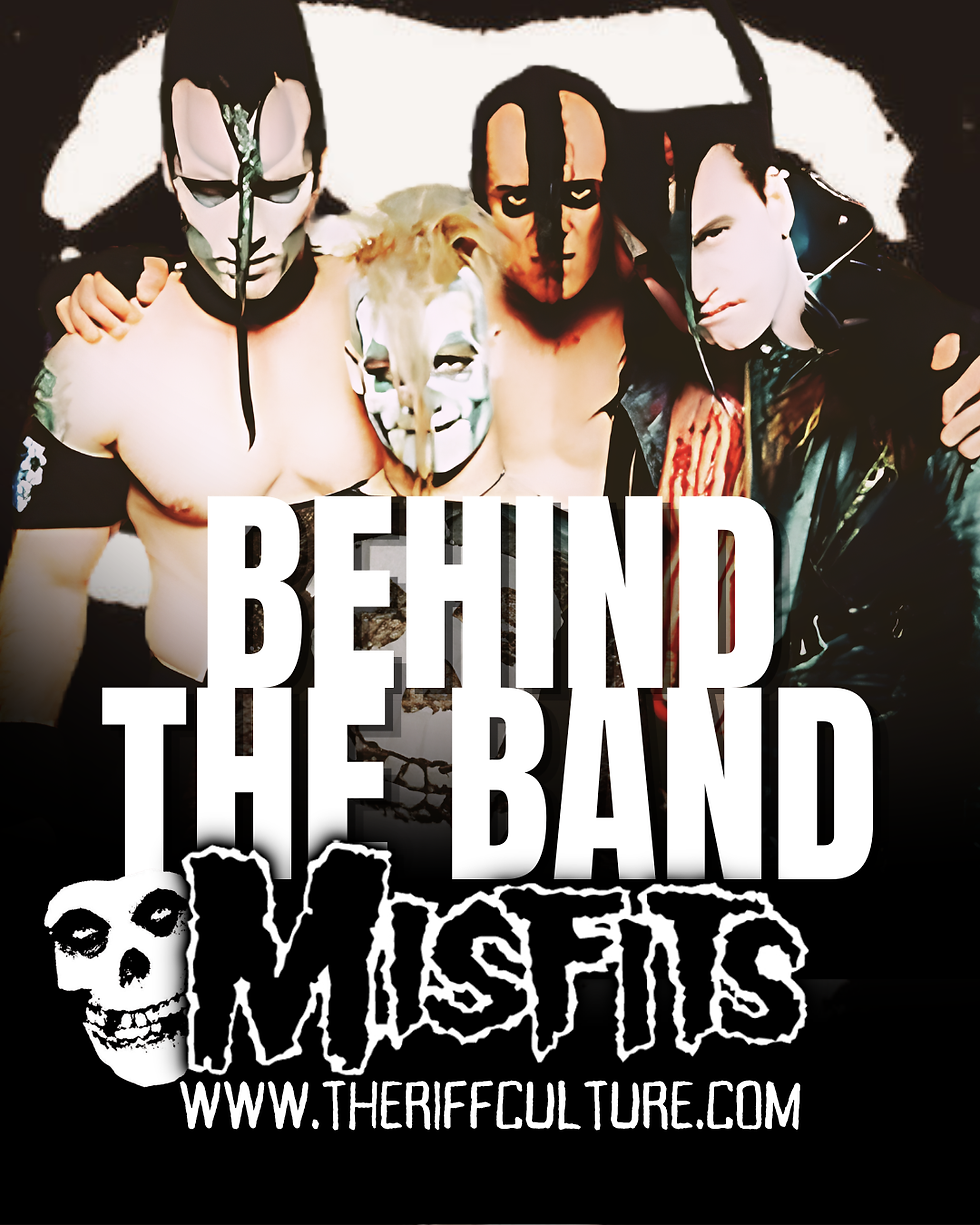
Before the skull became iconic, before Metallica covered their songs, and before horror punk had a name, the Misfits were just a few kids from New Jersey trying to make noise in a scene where they didn't quite belong.
In 1977, punk rock was exploding. The Ramones were tearing through New York clubs, the Sex Pistols were causing chaos in Britain, and a new generation of musicians was rejecting everything mainstream rock had become. But across the Hudson River, in Lodi, New Jersey, something different was taking shape. While much of punk was focused on politics, frustration and rebellion, the Misfits were drawing inspiration from old horror movies, comic books, monsters and 1950s rock and roll.
They had little money, limited experience and, believe it or not, their original lineup didn't even have a guitarist. What they eventually created would become one of the most recognizable identities in punk rock history.
From Lodi, New Jersey, to CBGB
The Misfits came together in 1977 when Glenn Danzig connected with bassist Jerry Caiafa, later known as Jerry Only, through drummer Manny Martinez. Jerry was just 17 years old and still in high school. He had only recently started learning bass.
Their first lineup consisted of Danzig on vocals and keyboards, Jerry on bass and Manny on drums. In an interview with Maximum Rocknroll, Jerry recalled that Danzig had booked a show before the group was even fully established. Within weeks, they were performing at New York City's legendary CBGB, with their first show taking place in April 1977.
Jerry later remembered how inexperienced they were:
"We weren't visual at all. We didn't have our real 'Famous Monsters' look."
At the time, the band was watching groups like the Ramones and Blondie gain momentum in New York. They soon realized their unusual keyboard-driven lineup needed something else. A guitarist. Franché Coma joined later that year, helping push the Misfits toward the aggressive guitar-driven sound that would define their early recordings.
Why Horror? Because They Didn't Fit In. The Misfits weren't just trying to sound different. They wanted to look different, too. Jerry has explained that the New York punk scene was heavily associated with drugs, something he didn't particularly identify with as a teenage musician. Instead, he and Danzig leaned into something they already loved, horror films, science fiction and monster culture.
"We loved horror films, sci-fi, B-movies," Jerry told Metal Hammer.
It was a natural fit. The band's name itself came from The Misfits, the 1961 film starring Marilyn Monroe. Their music combined violent, fictional imagery with surprisingly catchy melodies influenced by early rock and roll. Songs about monsters, Martians and the undead became their signature. And slowly, the Misfits developed an identity that nobody else in punk quite had.
The Story Behind the Famous Skull
You can recognize a Misfits shirt from across the street. But that skull wasn't originally created for the band. It came from The Crimson Ghost, a 1946 movie serial featuring a mysterious, skull-faced villain. Jerry recalled that he and Danzig were experimenting with a small T-shirt business called Horror House, hoping to sell monster-themed shirts in Manhattan.
While looking through horror magazines for designs, they discovered the Crimson Ghost. They placed the Misfits logo above the character. And it worked. What started as imagery borrowed from an old horror serial eventually became the band's unmistakable Fiend Skull.
The Misfits also developed their signature devilock hairstyle, with long, pointed hair hanging down the front of the face. Between the skull, the hair and the horror imagery, the band had created something bigger than an album cover. They had created an entire visual identity.

The Album That Nobody Wanted
In 1978, the Misfits recorded what should have been their debut album: Static Age. The sessions featured Danzig, Jerry Only, guitarist Franché Coma and drummer Mr. Jim. The music was raw, melodic and aggressive, with songs including "Hybrid Moments," "Last Caress" and "We Are 138." But there was a problem. The band couldn't secure a release for the full album.
Instead, portions of the recordings appeared on singles and later compilations, while Static Age remained unreleased in its complete form for years. It wasn't until 1996 that the full recording finally appeared as part of the Misfits box set.
Looking back, Jerry recalled:
"We couldn't understand how nobody got it back then!"
Today, Static Age is widely regarded as one of the defining recordings of the band's original era. But at the time, the Misfits were still struggling to get their music heard.
When the Misfits Found Their Sound
By the early 1980s, the band had undergone several lineup changes. Jerry's younger brother, Doyle Wolfgang von Frankenstein, joined on guitar in 1980, bringing another important piece of the band's classic identity.
In 1982, the Misfits finally released their first full-length album to reach stores: Walk Among Us. Packed with songs like "Astro Zombies," "Skulls," "Vampira" and "I Turned Into a Martian," the record captured the band's horror-inspired punk sound. The songs were short, fast and aggressive, but Danzig's deep, melodic vocals gave them something unusual. You could hear the influence of classic rock and roll beneath the distortion.
Then came 1983's Earth A.D./Wolfs Blood.
The music was faster, harsher and increasingly influenced by hardcore punk. Tracks like "Green Hell," "Death Comes Ripping" and "Wolfs Blood" demonstrated just how aggressive the band had become. The Misfits were no longer simply a strange punk band obsessed with horror movies. They were helping bridge the gap between punk, hardcore and the heavier music that would follow.
The Breakup That Came Too Soon
Despite their growing reputation, things behind the scenes were falling apart. Years of lineup changes, difficult touring experiences and creative tensions had taken their toll. In October 1983, following a troubled Halloween performance in Detroit, the original Danzig-led Misfits came to an end. Danzig moved on to form Samhain, eventually launching his successful solo career under the name Danzig.
Jerry Only and Doyle would later revive the Misfits with a different lineup, including vocalist Michale Graves, releasing American Psycho in 1997. But the band's original recordings were about to find an entirely new audience.
How Metallica Helped Introduce the Misfits to a New Generation
Here's where the story gets interesting. The original Misfits had already broken up when their influence began reaching a much larger audience. In 1987, Metallica recorded covers of "Last Caress" and "Green Hell" for The $5.98 E.P. Garage Days Re-Revisited.
For many metal fans, it was their first introduction to the New Jersey horror punks. Metallica's support helped expose the Misfits to listeners who might never have discovered their original recordings. Other artists, including Guns N' Roses, would also cover Misfits material.
What had started as a small underground punk band was becoming an influence across multiple generations of heavy music.
The Band That Refused to Fit In
The Misfits never followed the traditional path to success. Their early records struggled to find distribution. Their lineup constantly changed. Their original era lasted only a handful of years. Yet they managed to create something that has survived for nearly five decades. A sound that combined punk aggression with unforgettable melodies. An image built around classic horror. And an attitude that made being different the entire point.
Jerry Only once explained the band's enduring appeal:
"I think we created a niche. We stuck to what we did, and we did it well."
It's a fitting description of a group that never quite belonged to any one scene. They weren't just punk. They weren't metal. They weren't simply a novelty act obsessed with monsters.
They were the Misfits. And sometimes, refusing to fit in is exactly what makes a band unforgettable.


